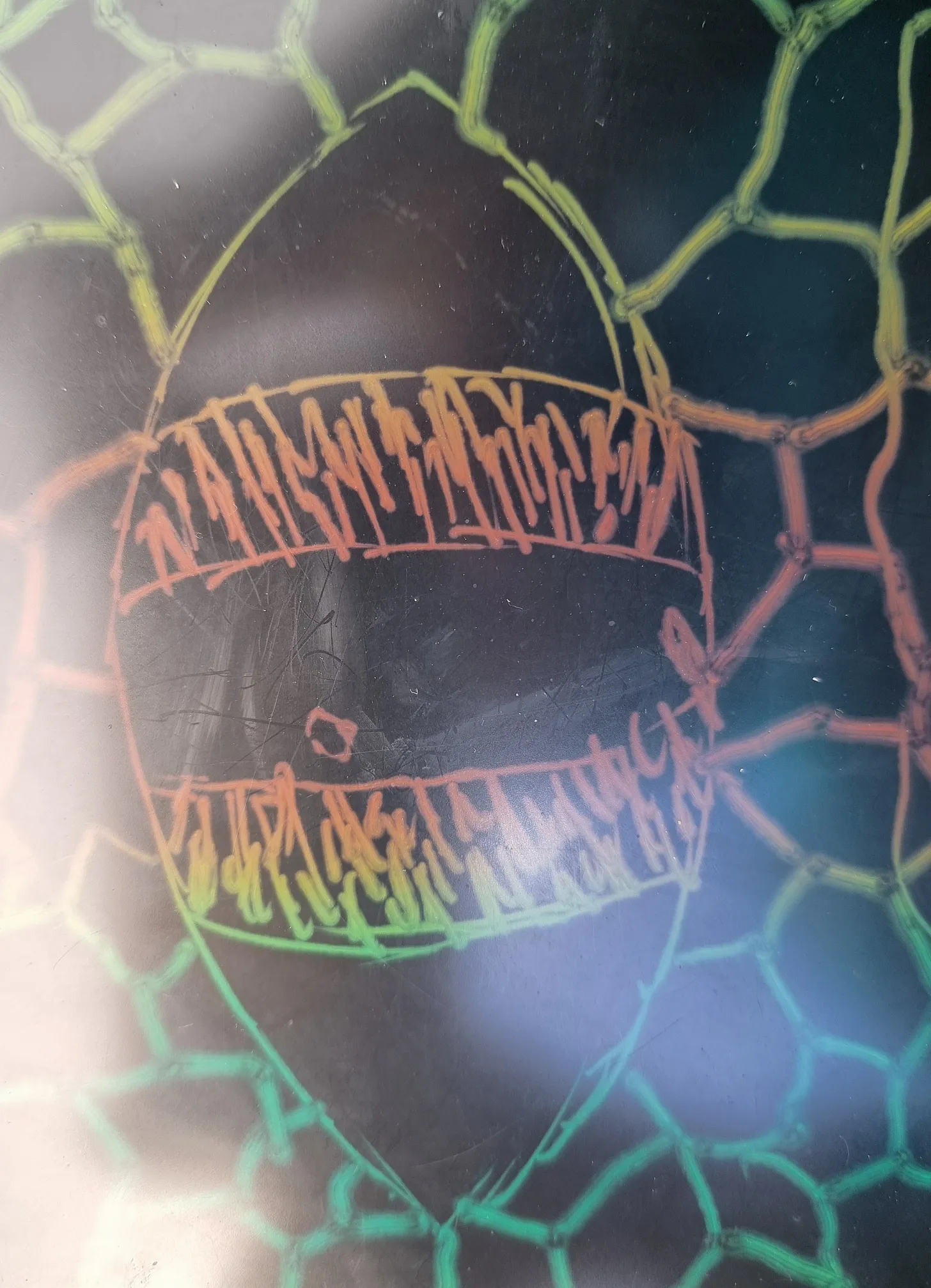
Ghosting someone. To many that means cutting communication cold. Cutting someone off. It could be, in that word, there is a hint too of a second image on a digital display – a disembodied phantom not truly representative of – and distracting from – the original.
Ghosting:
verb; to create a digital representation of a dead person, which mimics characteristics of being alive.
To me, that seems an apt neologism, a contemporary usage.
It is not a subtle sign that, in our Western culture, we may have become so deeply unequipped and unprepared for loss that we would do such a thing as this ghosting.
What benefit is there to the dead of such a techno-resurrection? Many of us will have experienced seeing a fox, a badger, or a wild fowl up close – inches from our faces, due to the innovation of taxidermy. But what benefit was there to the fox or fowl?
As we find ourselves awed and spellbound by new digital necromancies, it behoves us to ask: What about this arcane conjuring entices us so?
Why talk to an AI synthesised virtual version of your dead child or parent?
Now there’s a response to that which pulls on my heart strings: To say the things you never got to say. And how the regrets, like stones, can pile high for missed words.
I was very close to my auntie, and after she died, I couldn’t believe I’d never asked her why she didn’t use her given name. I’m sure there was, and is, a story behind it that which I will never know, but I will always wonder.
My uncle was one of four men in his squad to survive an ambush in North Korea. He never talked about it. Ever. I knew only that he’d been conscripted into the armed forces, and he had a deep respect for the history of certain conflicts and various types of military machines. The only person who knows some of what happened in that place is his cousin, who is in old age himself. If I don’t ask my uncle’s cousin about it, the details of what happened will be lost. It’s up to me, now, today – tomorrow might be too late.
That’s what it means to be alive, to be human – tomorrow might be too late.
If I don’t tell my parents or my children that I love them and I am grateful for their presence in my life, then, that’s on me. The assumption of tomorrow is no release from the truths and obligations of today.
If we allow ourselves to be too busy, if we are scared to open up, to be seen as weak or emotional… whatever convincing reasons we let get in the way – living with, and grieving, the loss of what we could have asked, could have done – surely all that in its pain and complexity, seen from the outside by those around us, is the learning they need, to have a chance to do it differently?
I never asked my other auntie about her grandmother. They lived together for years and I never knew – because I never asked. She must have known her grandmother so so well – the intimate, daily familiarities. I know nothing about my great-grandmother, nothing, because everyone who ever knew my great-grandmother is dead. And I never asked.
Loss and grief are the gift, but maybe the gift isn’t for me.
…
So, when I’m gone, don’t ghost me. Don’t pseudo-resurrect me and pretend there’s something of my soul in the averaged, regurgitated, positivised, pasteurised, words vomited forth from that machine.
There is no love there.
Say it to my face now, today, before it’s too late.
Let me die in the old way, the way which makes you feel all those cut strings and words left unsaid. Be bathed in the loss of what was and what was not. Know what too late feels like.
I will not be there in the machine – if you call. Those eyes will not be mine. Those words will not be soaked in these years, will not carry the smiles of my grandparents, will not know the beauty I kept hidden, will not know all that went unrecorded, and they will not contain my mistakes.
May my death bring not closure, but may it linger, remind you, be the words on the tip of your tongue, be an old scar, and a blessing.
You can read more from James B on his Substack…