The Author is not dead, but they need to be absent so that their book can be completed.
For me, the process has gone something like this. I read a lot of books and, eventually, that made me want to write. So, I wrote a lot of words and that made me start thinking about the act of writing and creating itself. I have to do something with all these jumbled thoughts and, so, blog!
I am not here making Roland Barthes’s point, that the writer’s work must be separated from the writer so that the reader responds to it free of the control and context provided by the tyrannical presence of an ‘author’. Barthes contends that the author is a mere scribe, and, once they have produced the work, it is for others to interpret untrammelled by the authority of an author. The author is dead.
I favour a more collaborative, less absolutist, approach, and mine is a different point.
For me, a book, as a work, is only complete when it is read by someone. A book, after all, is a mere collection of marks on a page. Words are nothing until read and interpreted. Only then do they have meaning. What we consider sight is actually something happening in our heads; not how things might objectively appear, assuming things have an objective appearance. What we see is what our brains say things look like. Likewise, scribbles on a page are nothing until our brain tells us what idea, emotion or picture they represent or invoke.
A novel, then, is only complete when someone reads it and completes its meaning with their understanding and imagination. The author does not have to die. What we know of the author or things the author has said might, for instance, inform the imaginative act of completing the novel by reading it. That would be anathema to Barthes. I do not really care. All I know is that, for a book to be complete, someone must read it, and the author is not engaged in that part of the process. The author’s work is done, and they are absent whilst readers complete the work.
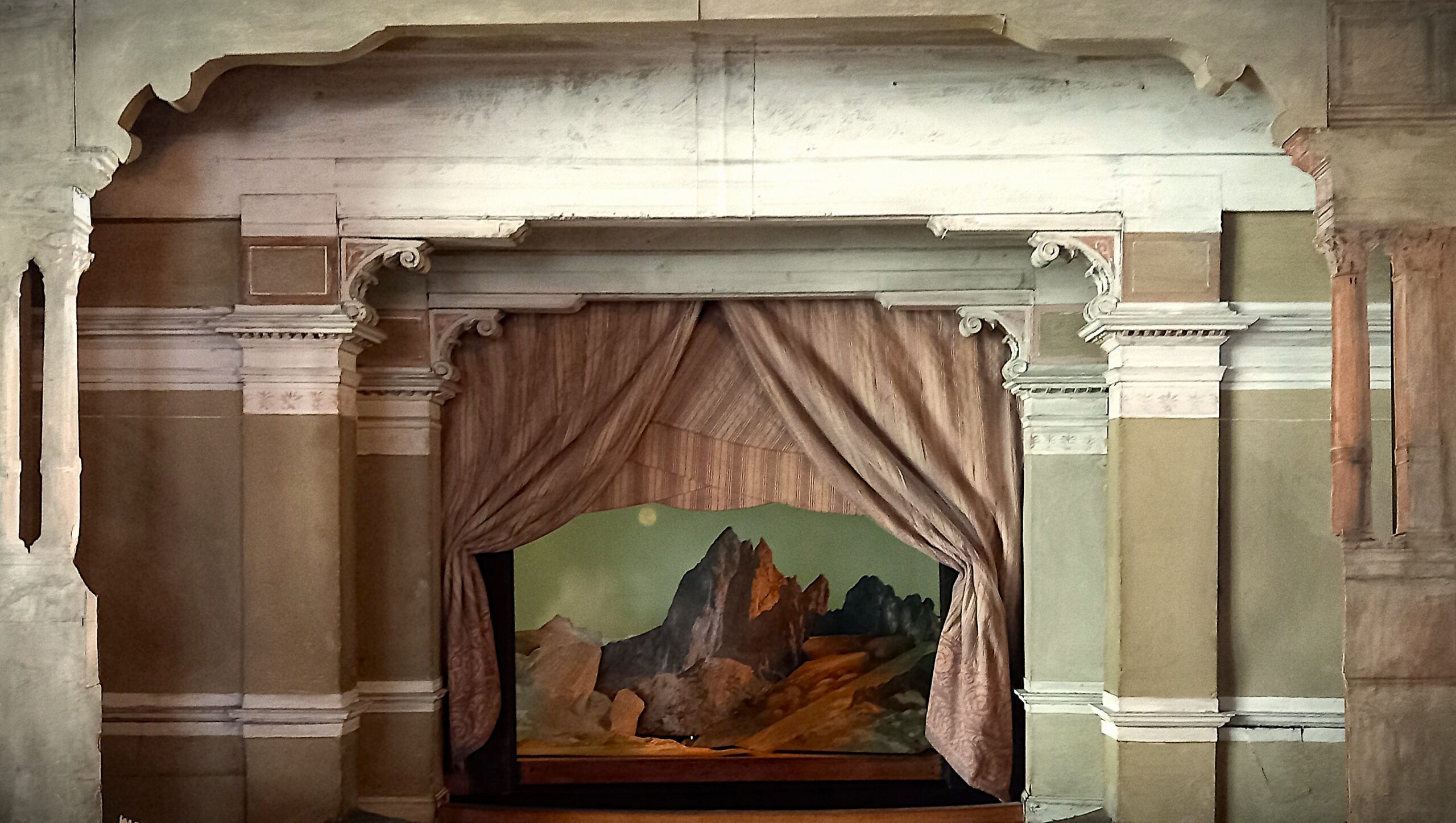
Perhaps think of it as a play. To be complete, as a piece of art, a play needs to be performed. That requires others, and the imagination of those others. Everyone – directors, actors, stage designers – are putting their own interpretations upon those marks on the page, making them into something unique and making them something more, something different, even in the act of bringing them to life. Then there is the audience. The performance of the play is completed only within the mind of the audience members resulting in hundreds or thousands of unique versions of each performance. The reader of a novel is both the director, cast and crew, and the audience. The words on the page, the author’s bit, is but one half of the equation. The reader’s imaginative reaction to the words on the page is the other half. Each reading completes the work anew as a unique experience, therefore, as a unique piece of work.
This, I think, is easiest to see in fantasy writing, at least in what is commonly called ‘high fantasy’. In a genre seemingly obsessed with sub-genre categories and definitions, ‘modern fantasy’ understands the term ‘high fantasy’, typically, to mean a fantasy set in an invented secondary world, as distinct from this, the ‘primary world’, and it is often epic in nature. In other words, we are not in Kansas anymore. This accounts for the traditional emphasis upon world-building in fantasy fiction. A new setting has to be conjured and presented to the reader, yet no two readers will imagine the same exact world; each will read and then picture it differently. Each completes the picture, the description, the world. So, it takes both the now absent author, and the now present reader, to whom the baton of imagination has been passed, to complete the vision, finish the work.